
Directional Arrow Placement for Brisbane Car Parks: Rules + Audit Checklist
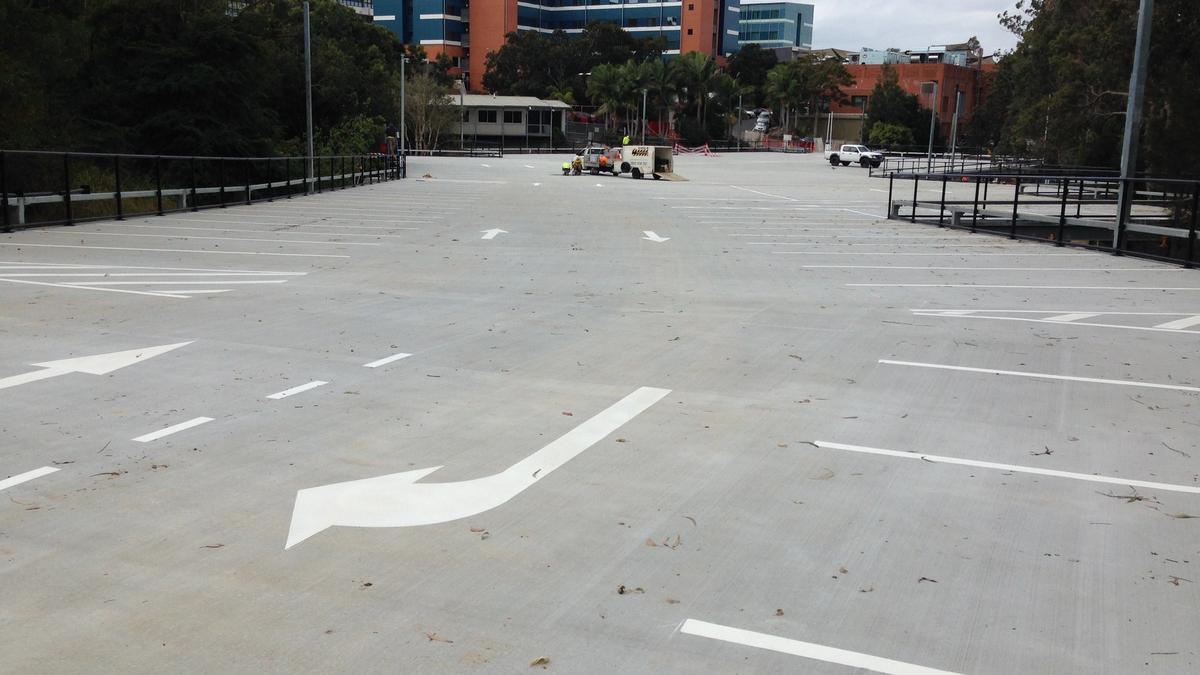
Get Drivers Flowing the Right Way in Your Car Park
Directional arrows in Brisbane car parks do much more than tell people where to go. When they are placed well, they cut down on low-speed crashes, reduce awkward stand-offs and keep queues from backing up onto busy streets. When they are placed badly, even a good layout can feel cramped, confusing and slow.
Around South East Queensland, we see the same pattern repeatedly, especially in older or tighter car parks. Narrow ramps, small bays, mixed users like utes and delivery trucks, and people walking with kids or trolleys all share the same space. The painted arrows and signs are often added last, even though they are what drivers rely on in the moment. Spacing, direction and repetition all matter just as much as the physical layout.
In this guide, we walk through simple rules for one-way loops, sightlines and blind corners, along with ways to manage those small but messy intersections inside your car park. We also finish with a quick walk-through checklist you can use with your team or contractor to assess how your current markings are really working.
Core Rules for One-Way Loops and Aisles
A clear one-way loop is usually the easiest way to move traffic through a car park. It reduces head-on situations, supports angled parking and helps drivers make quicker choices as they turn in from a busy Brisbane road. When drivers only have one legal direction to think about in an aisle, stress levels drop, along with the chance of a sudden stop or risky reverse.
For one-way aisles and loops, think about:
- Keeping the direction consistent so drivers can predict what comes next
- Aligning angled bays with the arrow direction so cars enter and exit smoothly
- Avoiding dead ends where drivers are tempted to reverse the wrong way
Arrow spacing and repetition matter more than most people expect. A single arrow at the start of an aisle is not enough, especially when bays are full and vehicles are large. Drivers should be able to see confirmation markings as they move, not only at the entry.
Good practices include:
- Repeating arrows along long aisles so one is visible between parked vehicles
- Placing arrows close to decision points like turns, splits and end-of-aisle choices
- Keeping all arrows in that aisle the same style and orientation
Entries, exits and ramp transitions need special care. At the entry, arrows should lead drivers into the correct lane before they reach boom gates or ticket machines so they do not need last-second lane changes. At ramp transitions, arrows should:
- Point clearly into the ramp entry or exit lane
- Sit before the slope starts, where drivers still have time to react
- Match any arrows painted on the ramp itself
Using Directional Arrows in Brisbane to Protect Sightlines
Sightlines are about what drivers can actually see from the driver’s seat. Columns, garden beds, walls, sharp bends and even large parked vehicles can hide oncoming traffic or pedestrians. Thoughtful use of directional arrows in Brisbane car parks can gently steer drivers into better positions where they have more time to see and respond.
We often look at:
- Where drivers first meet a bend or column
- How far ahead they can see as they turn
- Whether the arrow position suggests a safer tracking line around an obstacle
Blind corners and tight ramps need slower speeds and clear separation of movements. Arrows before a bend should appear early enough for drivers to start positioning their vehicle before the view closes in. After the bend, repeating arrows helps keep them in the right lane and discourages corner cutting.
For these tricky spots, consider:
- One arrow before the corner, in clear view as drivers approach
- Another arrow just after the bend to confirm direction
- Pairing arrows with advisory speed markings where appropriate
Complementary markings and signs are just as important as the arrows. If you have give-way lines, speed markings, No Entry text or wall-mounted signs, they should all tell the same story. Mixed messages cause hesitation, which leads to braking and then small chain reactions behind.
A simple rule is one movement, one message. Where you want drivers to give way, repeat that intent with:
- Ground markings like give-way triangles or lines
- Arrows that clearly show who is moving through
- Wall or post signs that match the arrow direction
Controlling Intersection Conflict Points in Car Parks
Inside a car park, conflict points are where paths cross or merge. T-junctions, cross intersections, ramp-to-aisle joins and pedestrian crossings are the main ones. Directional arrows shape what drivers expect other vehicles to do as they approach those points.
A quick way to map conflict points is to trace:
- Where aisle traffic enters the main loop
- Where ramp traffic meets the main floor
- Where people on foot are expected to cross traffic
Priority and right of way should feel obvious, even without a written rule book. Arrow direction, positioning and supporting markings like give-way or stop lines all work together. The aim is to make it clear who is entering and who is through traffic.
We like to:
- Give the main loop a strong, continuous arrow story
- Use give-way lines on minor aisles feeding into that loop
- Avoid having two opposing arrows meet right at the intersection nose
Reducing decision load at intersections is about not giving drivers too many options at once. Optional turns in every direction, sudden direction reversals and inconsistent arrow angles all increase mental load. That is when people hesitate, roll through slowly or make snap decisions.
Keep intersections simple by:
- Using consistent arrow orientation throughout the car park
- Limiting turn choices at tight internal junctions where space is limited
- Avoiding sending drivers into odd S-bends immediately after a turn
Practical Layout Tips for Tight Brisbane Sites
Many Brisbane, Ipswich and Gold Coast sites are constrained by existing buildings, shared access drives and service areas. When you cannot change the structure, directional arrows become a key tool in making the space feel calmer and more logical.
On tight sites, arrows can:
- Guide vehicles around structural columns without awkward three-point turns
- Keep cars away from loading docks or service doors
- Help drivers loop back to exits without needing U-turns
Heavy vehicles and pedestrians should not be competing for the same strip of concrete. Where you have delivery trucks, trade utes and shoppers in the same area, marked routes make a big difference.
Helpful ideas include:
- A clear, signed truck route with arrows that avoid main shopper aisles
- Marked pedestrian paths with zebra markings and edge lines
- Buffer areas around loading zones so reversing trucks are separated from general traffic
Future-proofing your markings means thinking about how the site may be used over the next few remarking cycles. EV bays, click-and-collect spots and rideshare pick-up zones are becoming more common. If you plan arrow directions with these in mind, you are less likely to need a full repaint when something new is added.
You can:
- Keep key through routes simple and strong so new zones can be added later
- Leave space for dedicated entry or exit paths for special bays
- Avoid locking yourself into layouts that rely on awkward reversing movements
Quick On-Site Audit Checklist You Can Use Today
A simple walk-through can reveal a lot about how your current arrows are working. Walk the same path a customer would take, from entry to exit, and ask yourself what your eyes are drawn to at each decision point.
Try this step-by-step method:
- Start at the street entry and follow the path through the boom gate or driveway
- Walk each main loop and a few aisles, looking for arrow spacing and clarity
- Stand at internal intersections and check whether arrows and give-way lines agree
- Walk up and down ramps in both directions to see what is visible to a driver
Key checklist items include:
- Are all one-way aisles supported with clear, repeated arrows along their length?
- Are arrows visible early enough before blind corners, tight bends and ramp brows?
- Do intersection arrows, give-way markings and signs all send the same message?
- Are any faded, confusing or leftover arrows quietly pointing drivers the wrong way?
When you spot gaps, it usually helps to involve professional line markers who work with these patterns every day. At Angle Linemarking QLD, we help review layouts, refresh directional arrows in Brisbane and surrounding areas, and re-mark high-risk zones so your site is easier for drivers and pedestrians to understand. With the right arrow placement, your existing car park can feel safer, calmer and easier to use for everyone who drives through.
Get Started With Your Project Today
If you need clear, compliant traffic flow in your car park or facility, we can help you plan and apply precise directional arrows in Brisbane that suit your site. At Angle Linemarking QLD, we use quality materials and proven layouts to improve safety and reduce confusion for drivers and pedestrians. Reach out to our team today so we can discuss your project, provide straightforward advice and organise a time that works for you.