
Essential Car Park Line Marking Standards in Queensland
Why Car Park Line Marking Standards Matter in Queensland
Clear, correct line marking in a car park is about much more than neat paint on the ground. It helps drivers understand where to go, where to park and how to move safely around people on foot. When markings follow the right standards, the whole site usually feels calmer, safer and easier to use.
Across Queensland, car parks are influenced by Australian Standards and local road rules. If the markings are wrong, faded or laid out poorly, they can lead to accidents, confusion and complaints. They can also create risk for property owners, body corporates and facility managers if something goes wrong on site. If you manage a car park marking project on the Gold Coast or anywhere in South East Queensland, understanding the basics of these standards is important so you can make better decisions when planning your layout and choosing a contractor.
The Main Standards Behind Car Park Line Marking
When we talk about car park line marking standards, we are really talking about a mix of design guides and road rules that work together. In Queensland, off-street car parks are typically guided by Australian Standards dealing with parking layout and access. There are also Queensland Transport and Main Roads documents that influence how markings, signs and traffic controls should look and where they should be placed.
These documents help guide things like:
- Parking bay layout and aisle widths
- Entry and exit locations
- Gradients and ramps
- Sign positions and wording
- Line types, colours and symbols for different uses
Not every car park has the same requirements. A small private car park will not be treated the same as a large retail centre or an industrial site with heavy vehicles. That is why engaging a specialist in car park marking on the Gold Coast helps keep your layout aligned with the most relevant Australian Standards and local expectations for your type of property. A professional team should always refer to current requirements and apply them to the real conditions on the ground, not just copy an old plan.
Parking Bay Dimensions, Angles and Layout
The way bays are arranged has a big impact on how the car park feels to use. Different layouts suit different sites and traffic patterns.
Common bay angles include:
- 90-degree parking, good for higher capacity and two-way aisles
- 60-degree parking, often used where easier entry is needed
- 45-degree parking, useful in tighter spaces or one-way layouts
The angle you choose affects:
- How easy it is for drivers to turn in and out
- Whether aisles are one way or two way
- How many bays you can fit in a row
- How much room is needed for larger vehicles
Standards also give minimum guidance for bay length, width and aisle width for different vehicle types, such as standard cars, smaller cars or commercial vehicles. These details should always be checked against current Australian Standards by a qualified designer or contractor.
What matters for day-to-day use is that lines are:
- Straight and consistent
- Easy to see in normal site conditions
- Spaced correctly for the vehicles you expect
For busy retail and hospitality sites, professional car park marking on the Gold Coast can help balance bay angles, aisle widths and turning areas so you get a good mix of capacity and safe movement.
Accessible, Visitor and Special Use Bays
Accessible parking bays are one area where guessing is never a good idea. These bays need to follow strict rules on size, side access zones, symbols, colours and signs so people with disability can safely enter and exit vehicles. They also need clear access paths from the bay to building entries.
On a typical site you might also have:
- Visitor or customer bays near main entrances
- Short-stay or pick-up bays with time limits
- Loading zones for deliveries
- EV charging bays
- Reserved bays for staff, residents or service vehicles
These special use bays are usually marked using:
- Different colours or shading
- Painted symbols or letters
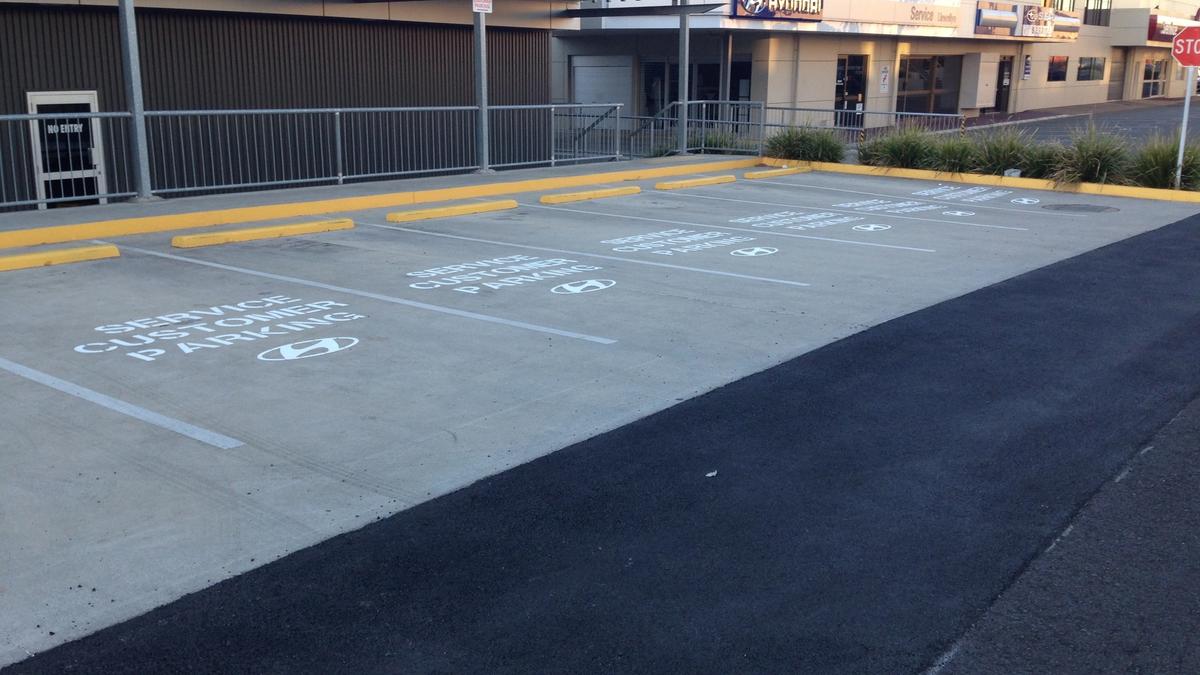
- Stencils such as VISITOR, LOADING or STAFF
- Matching upright signs so messages are visible even when cars are parked
On the Gold Coast, car park marking for accessible and special-use bays needs careful planning so it lines up with national access requirements and any local council expectations for that type of site. Accurate, durable symbols and wording help avoid confusion, complaints and enforcement issues.
Traffic Flow, Pedestrian Safety and Wayfinding
Good car park design is not just about where cars sit when they are parked. It is also about how they move in and out and how people on foot move around them.
Key line marking tools for traffic flow include:
- Directional arrows in aisles
- Clear entry and exit points
- Give-way or stop lines at conflict points
- Hatched areas to protect turning space or sightlines
For pedestrians, markings often show:
- Marked crossings between parking areas and building doors
- Highlighted walkways along the fronts of bays
- Safety zones near lifts, stairs and loading areas
Simple legends such as NO PARKING, KEEP CLEAR and SLOW, when paired with consistent colours and symbols, support safer decisions by drivers and pedestrians. Well-planned car park marking on the Gold Coast can make it much easier for new visitors to understand where they are meant to go without needing to think too hard, which helps reduce stress in busy areas.
Materials, Durability and Surface Preparation
Car park markings need to cope with constant vehicle movement and regular site use. The right materials and preparation help them stay clearer for longer and perform better in demanding areas.
Common options include long-wearing road-grade paints and other coatings designed for heavy traffic. The right choice depends on the surface, the type of vehicles using the area and how often the site is used.
Good results rely on more than just the paint itself. A professional team will focus on:
- Thorough cleaning to remove dust, oil and loose material
- Repairing damaged concrete or asphalt where needed
- Applying primers or sealers when the surface requires it
- Checking that the surface is properly prepared before painting
Even the best materials wear over time. Routine inspections and periodic remarking help keep lines sharp and easy to read, which supports both safety and compliance.
Working With a Professional Car Park Line Marking Contractor
For property owners, strata committees and facility managers, working with the right contractor can remove a lot of stress. A good car park line marking team understands how Australian Standards, Queensland rules and local council expectations fit together with the real-world needs of different sites such as retail, commercial, industrial and residential complexes.
A quality contractor should be able to help with:
- On-site assessment of your current layout and condition
- Practical layout advice that suits the way your site is used
- Surface preparation, repairs and cleaning
- Precise line marking and clear stencilling
- Line removal or reconfiguration when layouts change
- Straightforward communication about safety and compliance points to consider
At Angle Linemarking QLD, we work on car park marking on the Gold Coast and across South East Queensland and Northern NSW. Our focus is on clear, safe and practical line marking, line removal and surface preparation that supports the way your site actually operates while keeping in mind the standards that apply.
Get Safe, Clear Parking Lines On Your Gold Coast Property
If you are ready to improve safety, traffic flow and first impressions, our team at Angle Linemarking QLD can help. Whether you need fresh layouts or a full refresh, we provide precise, compliant car park marking in Gold Coast tailored to your site. Talk to us about your project requirements and timeframes so we can plan around your operations. For quotes or bookings, simply contact us today.