Inside Brisbane Industrial Line Marking for Exclusion Zones
Build Safer, Clearer Exclusion Zones From the Ground Up
Clear exclusion zones help separate people from forklifts, delivery vehicles, plant and other high-risk work areas. When boundaries are easy to see, your team, contractors and visitors can better understand where they can walk, work, load or wait.
For industrial line marking in Brisbane, we look at how each site operates before putting paint on the ground. Warehouses, loading bays, manufacturing spaces, distribution centres and public-facing industrial properties all need layouts that suit their own traffic flow, equipment and daily tasks. Faded, poorly placed or inconsistent lines can blur responsibilities and create unnecessary risk, so planning and ongoing care matter just as much as the initial application.
Understand What an Effective Exclusion Zone Must Do
An exclusion zone is a clearly identified area where access is limited because of a hazard or operational risk. It may sit around forklift routes, loading docks, racking, machinery, electrical infrastructure, stored materials or pedestrian crossings.
Ground markings make the boundary visible, but they work best as part of a wider safety approach. Site rules, clear signage and staff awareness all help people understand what the zone means and when they must stay clear.
Depending on the layout and purpose of the area, we may recommend a combination of:
- Solid boundary lines to define the edge of a restricted area
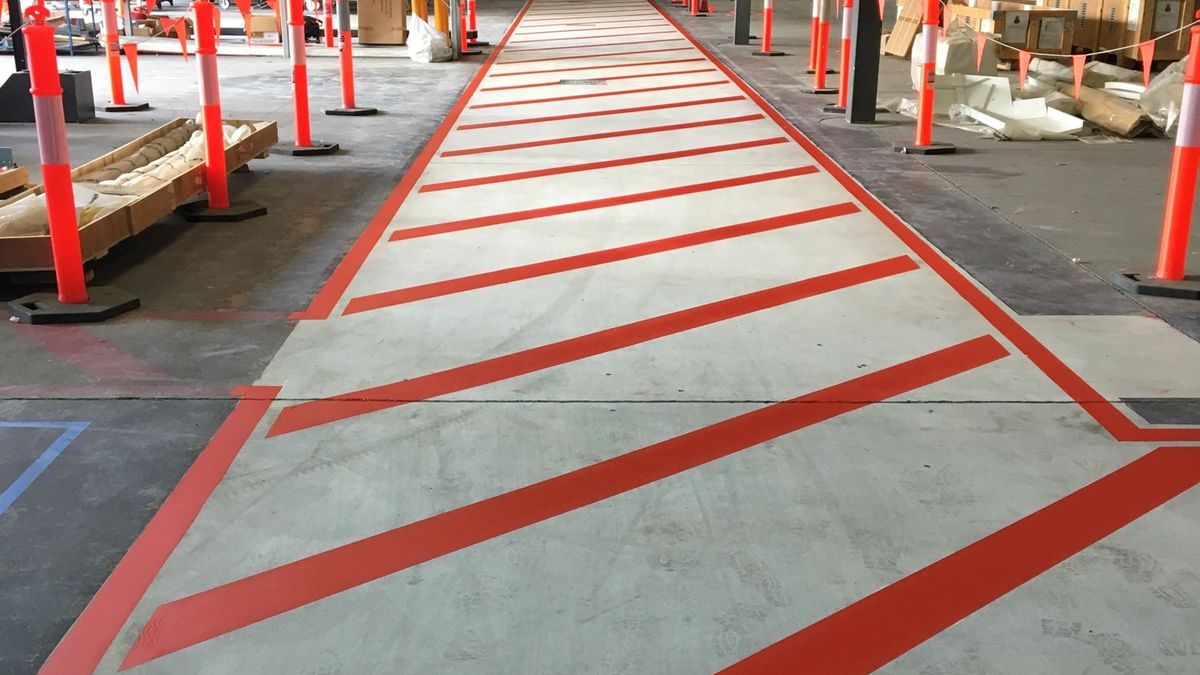
- Diagonal hatch markings to make no-go spaces stand out
- Directional arrows to show the intended vehicle path
- Marked pedestrian walkways and crossing points
- Short safety messages where they suit the location
Consistency is a big part of making markings easy to follow. If one colour or pattern means “keep clear” in one area but has a different meaning elsewhere, people can hesitate or make the wrong assumption. We help create a clear visual language across the property, so the layout feels organised rather than cluttered.
The right size for an exclusion zone depends on the site. Turning paths, vehicle types, operating equipment, required clearances and nearby work all need to be considered. Rather than relying on a standard measurement, we recommend a site-specific review that reflects how your people and machinery actually move.
Plan Industrial Line Marking in Brisbane Around Site Traffic
Before any marking begins, we need to understand the traffic story of the site. Where do forklifts travel? Which entrances receive delivery vehicles? Where do workers cross shared routes? Are there blind corners, tight turning areas or points where visitors may be unfamiliar with the layout?
Mapping these movements can reveal places where people and machinery are being asked to share too much space. A practical traffic plan can separate travel paths, guide vehicles through loading areas and set clear crossing points for pedestrians. It can also help keep emergency exits, emergency equipment and operational access areas free from obstructions or stored goods.
During a site assessment, we often review:
- Vehicle entry, exit and turning movements
- Pedestrian routes between work areas and amenities
- Loading zones, staging areas and dock approaches
- Racking, machinery and storage locations
- Emergency access paths and areas that must remain clear
Professional industrial line marking in Brisbane turns this planning into markings that suit the surface and working environment. A layout should not be treated as permanent if the operation changes. New racking, relocated machinery, added storage or different delivery patterns can all affect whether the existing lines still make sense.
Combine Line Marking, Signage and Surface Preparation
Painted lines tell people where a boundary sits, while signs explain the rule behind it. Together, they can make restricted areas easier to understand without relying on guesswork. For example, ground markings may show the edge of a loading exclusion zone, while signage reinforces vehicle directions, access restrictions, speed controls, PPE requirements or hazard warnings.
The condition of the surface matters too. Dust, oil, loose material, worn coatings and old markings can affect how well new lines adhere and how clearly they can be seen. Pressure cleaning gives us a cleaner base to work from, while line removal helps clear away outdated arrows, old bays and conflicting boundaries.
A review before new markings are installed can prevent a common problem: too many messages competing for attention. Overlapping colours, faded hatch areas and obsolete lines can make an industrial space harder to read, even when new paint has been added.
A coordinated approach can include:
- Removing lines that no longer match the current layout
- Pressure cleaning areas that need preparation
- Applying new exclusion zone boundaries and traffic markings
- Installing signs that support the ground-level instructions
When these elements are planned together, the result is a clearer site that is easier for regular workers and first-time visitors to understand.
Maintain Markings That Support Safety and Compliance
Industrial areas put line markings under steady pressure from vehicle tyres, equipment movement, dust, pallets and daily activity. Even a well-planned exclusion zone can lose its impact when its edges become chipped, faded or hidden beneath stored items.
Regular inspections give you a chance to spot issues before they become part of the normal background. We recommend documenting what you find and prioritising areas where unclear markings could increase the chance of people entering an unsafe space or vehicles travelling along the wrong route.
Check for:
- Broken boundary lines
- Worn hatch markings
- Unclear pedestrian paths
- Damaged signs
- Unauthorised storage inside restricted areas
- Traffic patterns that no longer match the marked layout
A site can change gradually, and old lines may remain long after their purpose has changed. Reviewing these details helps keep exclusion zones visible, relevant and aligned with how the property operates.
Ongoing maintenance makes industrial line marking in Brisbane part of a broader site safety program. Clear markings support workplace health and safety responsibilities while also showing employees, contractors, customers and visitors that the property is actively managed.
Make Every Restricted Area Easier to See and Follow
Effective exclusion zones rely on more than paint. They need a thoughtful traffic plan, clear visual signals, suitable surface preparation, professional installation and routine checks to remain useful over time.
Start by looking at the places where people, vehicles and plant come closest together. Clear boundaries, supported by matching signage and site rules, can make restricted areas simpler to recognise and easier for everyone on site to follow.
Improve Safety With Clear Zone Markings
For tailored industrial line marking in Brisbane, speak with our team about markings that support safer movement and clearer access controls. At Angle Linemarking QLD, we assess your operational layout and deliver practical line marking suited to your site. Let us help create durable, easy-to-follow exclusion zones for your workplace.