
Gold Coast Surface Prep: Matching Pressure Cleaning PSI to Asphalt vs. Concrete
Get Line Marking That Lasts: Start With Smarter Surface Prep
Durable line marking does not start with paint. It starts with the surface. If the ground is not cleaned and prepared the right way, even the best coating can peel, flake or fade early. In busy areas such as car parks, loading bays and warehouses, that can create confusion, safety risks and the need for frequent re-marking.
A common problem is ghosting, where old lines show through new markings. You can see faint shadows, texture changes or different colour bands under fresh paint. That usually comes from poor pressure cleaning, incorrect pressure settings or the wrong nozzle being used on different surfaces.
Asphalt and concrete are not the same. They respond very differently to water pressure. If the pressure and nozzle pattern do not match the surface, you can damage the base, leave hidden residue or cut grooves that later show through the new lines. Getting surface preparation right is one of the biggest factors in how long your markings last and how clean they look.
Why Pressure Cleaning Makes or Breaks Your Marking
Before any line is painted, pressure cleaning helps remove what stops the coating from gripping properly. On typical sites, that usually means:
- Dust and fine grit
- Tyre rubber and traffic film
- Oil and fuel stains
- Loose or chalky old coatings
- Mould, algae and general grime
If the cleaning is too light, some of that can stay behind, even if the surface looks clean to the eye. When that happens, the paint may:
- Bond well in some spots but not others
- Dry patchy or streaky
- Start peeling or flaking in high-traffic paths
- Reveal ghosted lines where old markings were
There is also a risk at the other end of the scale. Many people think more pressure is always better. On asphalt, too much pressure can start to ravel the surface, strip out binder or expose more aggregate. On concrete, excessive pressure can open up pores, scar the surface or drive water and contaminants deeper into the slab.
A controlled method works better. That usually means staged cleaning with:
- Pre-treatment, such as a detergent or degreaser on oils
- Dwell time so the product can work before rinsing
- Test patches to confirm safe pressure on each surface
- Consistent, overlapping passes to keep the clean even
This way, the whole area is ready for marking, not just the obvious dirty bands.
Reading Your Surface: Asphalt Vs Concrete
To match pressure and nozzles, the surface needs to be assessed first. Asphalt is flexible, made from bitumen that holds aggregates together. Concrete is rigid, cement-bound and usually harder at the surface. They react very differently when hit with high-pressure water.
Traffic patterns and general wear also play a part. Heavy traffic can polish wheel paths but leave edges more open and fragile. Concrete can develop staining, mould and algae, especially in shaded sections and along retaining walls.
When assessing a site, look for clues such as:
- Hairline cracks or crazing, which can open up with hard washing
- Ravelled or fretted asphalt at joints and turning circles
- Polished, glossy tracks where tyres always run
- Patch repairs that may be softer or weaker than the original surface
- Thick build-up of old coatings that might need line removal first
What looks like simple asphalt or concrete may hide soft patches, contamination or damage from past over-cleaning. An on-site assessment helps set safe pressure levels and nozzle choices so the preparation cleans without damaging the base.
Dialling In Pressure and Nozzles for Asphalt Surfaces
Asphalt needs careful handling. Too much pressure or a tight nozzle can cut into the bitumen, leaving rough bands that show under new lines. In most car parks, a moderate pressure with a wider fan nozzle is a safer starting point.
Key points for asphalt pressure cleaning:
- Use moderate pressure paired with 25 or 40-degree fan nozzles for general cleaning
- Keep the lance moving at a steady pace to avoid gouges
- Hold a consistent distance from the surface, not too close
- Use degreasers on oil spots instead of simply increasing the pressure
Nozzle angle and technique should be adjusted based on what you see:
- New, dense asphalt: gentler passes to avoid scarring a smooth finish
- Older, oxidised asphalt: careful balance to clean deeply but not strip binder
- Heavily soiled traffic lanes: more detergent and methodical passes rather than higher pressure
- Oil-affected areas: targeted chemical pre-treatment followed by rinsing, not brute-force blasting
Ghosting on asphalt is a big risk when old lines are only partly removed with high pressure. If the operator traces along the old line too slowly, the water can cut a slight groove or change the texture. When new lines go down, those bands may show as shadows or ridges.
A professional approach includes test strips to find a safe working range, neat overlaps so the surface looks even and care around joints, drains and patch repairs. If old markings need proper removal, pressure washing can be combined with mechanical line removal so the whole zone ends up even before painting.
Getting Concrete Clean Without Etching or Patchiness
Concrete can usually accept higher pressure than asphalt, but it has its own risks. Incorrect nozzles or pass speed can leave striping and swirl marks that stand out once new markings are applied.
For concrete, nozzle choice and technique might include:
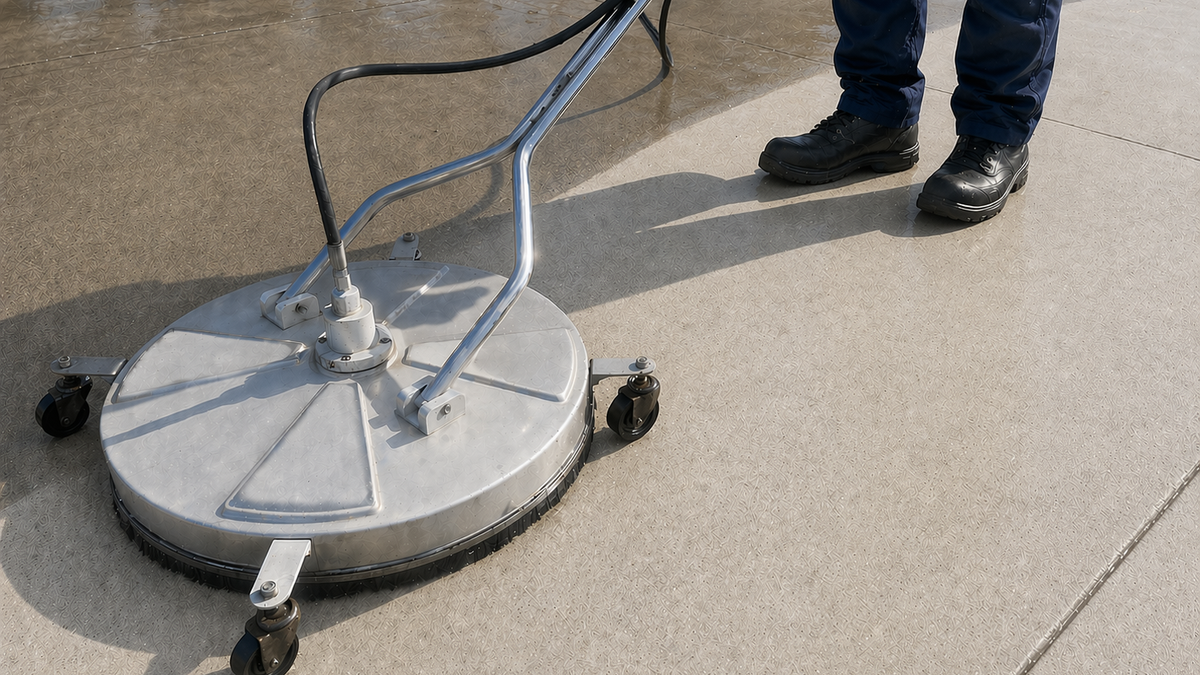
- Tighter fan angles or controlled rotary tools to lift deep grime in high-traffic or heavy-vehicle areas
- Wider fan nozzles and reduced pressure on sealed, coated or polished concrete
- Smooth, even movement to avoid light and dark bands
- Keeping the same distance so the impact pattern does not change mid-pass
If cleaning is uneven, ghosting can show on concrete in a few ways:
- Over-cleaned bands where old lines once were, creating a lighter strip
- Rough texture in some parts and smooth texture in others, so paint absorbs differently
- Different porosity between traffic lanes and parking bays, causing patchy drying
Best practice for concrete includes:
- Pre-treating mould and algae and allowing it to work into the pores
- Flushing off surface contaminants and deposits
- Balancing pressure and chemicals so the surface is cleaned, not etched
- Finishing with a final uniform rinse across the whole marking area
That way, the surface has one consistent colour and texture, so line marking looks sharp and wears evenly.
From Clean to Coated: Avoiding Ghosting and Early Failure
The time between washing and painting matters just as much as the wash itself. If the surface is still damp inside, or if contamination seeps back up, the new paint will not last as long as it should.
The final steps usually include:
- Allowing the surface to dry properly, especially joints and low spots
- Checking for any film left from tyres or products used in the cleaning
- Making sure mould, algae and salts have not bled back after rinsing
- Confirming obsolete markings are removed enough to avoid obvious ghosting
When preparation is inconsistent, paint performance is inconsistent. Some areas hold tight and stay bright. Others lift, flake or fade faster, so you end up with a patchwork effect and unclear guidance for drivers and pedestrians.
A simple quality checklist at the end of preparation helps. Look for a uniform colour and texture across the whole work area, no visible residue, no standing water in pores or joints and clear, clean paths where new markings will go. Planning the work carefully around site access and traffic helps reduce disruption while giving new line work the best chance to last.
Get Started With Your Project Today
If you are ready to refresh your surfaces and improve safety, our team at Angle Linemarking QLD is here to help. Book professional pressure cleaning in Gold Coast and we will tailor a solution to suit your site, schedule and budget. We handle everything from preparation to clean-up so you can focus on running your business. Reach out to our friendly crew today to discuss your project and lock in a time that works for you.