
Planning Warehouse Line Marking for Start-Ups
Set Your Warehouse Up for Safe Growth
Good warehouse line marking is not just about neat stripes on the floor. For new warehouses and logistics start-ups in Brisbane, Ipswich, Gold Coast and The Tweed, it sets the ground rules for safety, flow and day-to-day efficiency. Clear markings show everyone where to walk, where to drive and where not to leave pallets or equipment.
When you are starting out, a mix of new staff, new systems and new clients can quickly create confusion. Thoughtful line marking helps your team understand the layout from the first shift, so you have fewer near misses, fewer blocked aisles and less time wasted. It also supports workplace health and safety obligations as industrial estates continue to grow.
Local operating conditions matter too. Warehouses in Brisbane, Ipswich, Gold Coast and The Tweed often deal with regular truck and forklift traffic, which can affect how quickly markings wear. Treating warehouse line marking as a smart early investment, rather than a last-minute cosmetic job, gives your start-up a stronger base to grow safely.
Map How Your Warehouse Will Really Operate
Before anyone starts painting lines, it pays to step back and map how your warehouse will actually run. A floor plan on a screen is a start, but it rarely tells the full story of busy days, late trucks or last-minute orders.
Take time to walk the floor and think about how things move from door to door:
- Where trucks and delivery vans arrive
- Where goods are unloaded and checked
- How pallets move to storage, then to pick and pack areas
- Where finished orders wait to be dispatched
Bring your team into that walk if you can. People who will be on the forklifts or picking orders often spot risks that drawings miss, like tight turns or spots where trolleys and forklifts might cross paths. Having a line marking specialist walk through with you can help turn those ideas into a workable, safe layout.
Pay close attention to high-risk areas such as:
- Blind corners and intersections
- Shared forklift and pedestrian zones
- Loading docks
- Long pallet racking aisles
- Temporary staging zones during busier periods
Planning your line marking with higher-demand periods in mind helps keep things moving when your building is under pressure, not just on a quiet day.
Design Safe Traffic, Storage and Pedestrian Zones
Once you understand the flow, you can start planning the markings. The goal is simple: make it clear at a glance who and what belongs where.
Most warehouses will need a mix of:
- Marked forklift and vehicle routes
- Pedestrian walkways and crossings
- No-go or keep-clear zones around doors and plant
- Pallet bay outlines and numbering zones
- Staging, packing and returns areas
- Clear markings for emergency exits and equipment
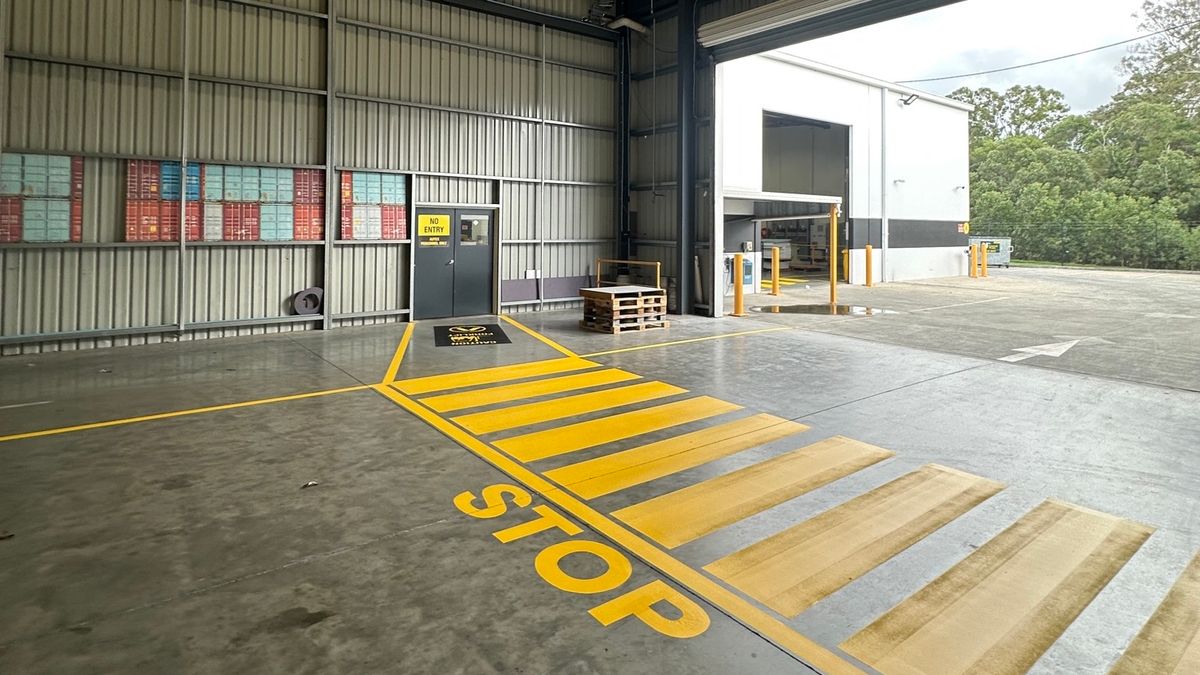
Colour and symbols do a lot of the heavy lifting. Different colours can separate pedestrian paths from forklift lanes. Hatchings help keep roller doors, fire equipment and electrical boards clear. Arrows show one-way traffic routes, which can reduce head-on encounters between forklifts in tight aisles.
Hazard markings around racking, columns and fixed plant make these obstacles stand out before someone clips them. Clear symbols and wording help new staff and visitors understand the rules even if they are not yet familiar with the site.
In busy industrial estates across Brisbane, Ipswich, Gold Coast and The Tweed, it is also important to think about how your internal markings connect to the outside world. Well-planned transitions between warehouse floors, loading docks and surrounding roads make it easier for drivers to see where to queue, reverse and park. Larger logistics operations might need wider forklift routes and more generous turning circles marked, especially if you work with longer loads or high-capacity equipment.
Plan Budget, Surface Preparation and Compliance From Day One
Good planning early on can save a lot of headaches later. Line marking usually works best when the slab is ready and the main layout is clear. This gives enough room for cleaning, surface preparation and accurate set-out before the site becomes harder to work through.
A few points to think about when planning:
- Isolation of areas while markings are being completed
- Condition of the existing surface
- Whether polished, burnished or sealed concrete will need preparation before line marking
- Removal of redundant line marking
Compliance should be part of the conversation from the start. Clear access to emergency exits and equipment, safe pedestrian routes and good visibility all support your workplace health and safety duties. Some major clients and logistics partners also have their own site rules, which can include specific colours, markings or walkways that need to be built into your plan.
Planning early gives you room to adjust racking layouts, staging areas or traffic flows before lines go down. That reduces the risk of rework once you start trading at full speed.
Partner With Local Experts for a Safer Start-Up
Setting up a new warehouse is a big step, and the layout choices you make in the early days can stay with you for a long time. Bringing in experienced local line marking support at the planning stage helps turn your ideas into a safe, practical floor plan.
A good partner will review your drawings, walk the site with you and suggest ways to separate traffic, protect pedestrians and allow for future growth. They can also help you think ahead about things like extra staging zones or how to extend forklift routes when you add more racking later.
Once your lines are in place, they will not stay crisp forever. Forklifts, pallet jacks, trucks and constant cleaning slowly wear coatings down. A simple maintenance plan can include:
- Regular inspections of key safety zones
- Touch-ups in high-wear forklift and truck lanes
- Periodic full remarking of faded walkways or symbols
- Updates when your layout, equipment or processes change
By treating line marking as part of your ongoing warehouse management, instead of a one-off project, you keep your facility safer, easier to understand and ready for audits or client visits.
Get Started With Your Project Today
If you are ready to improve safety, traffic flow and efficiency in your facility, our team at Angle Linemarking QLD is here to help. Learn how our warehouse line marking can be tailored to your site, schedule and compliance needs. Speak with our friendly team to discuss options, timeframes and pricing, or contact us today to book a site visit.