
Prevent Warehouse Incidents in Brisbane With a Near-Miss Heatmap
Near Misses as Warnings, Not Lucky Escapes
A forklift and a pedestrian pass each other in a tight warehouse aisle. Nobody is hit, nothing is broken and everyone keeps working. On paper, there was no incident. In reality, that near miss is a clear warning that something in the layout is not working.
Warehouse teams deal with this kind of close call all the time, especially around intersections, dock doors and busy pick faces. When those moments are ignored, the risk stays in the same place day after day. When they are treated as data, they show where your safety line marking needs to change.
It helps to think of near misses as dots on a map. When you start marking those dots on a plan of your warehouse, they quickly turn into a heatmap of risk. That heatmap can guide smarter line marking, clearer walkways and better safety signage so people and equipment can move with less chance of collision. This approach reflects real warehouse conditions, not just a drawing in an office.
Why Traditional Warehouse Markings Fall Short
Many warehouses start with a neat layout when they first open. Lines are fresh, walkways are obvious and dock zones look clear. Then the business grows and the way the site is used gradually shifts.
Common problems include:
- Lines faded by constant traffic, cleaning and heavy use near roller doors
- Layouts copied from another site that do not match your equipment or stock profile
- Markings that no longer match racking changes, new pick faces or new equipment types
- Old walkways still painted where people no longer walk or where pallets are now staged
A one-off paint job that never changes ignores how your operation keeps evolving:
- Order profiles change, so some aisles become much busier
- Staffing levels grow, so more pedestrians and pickers move through tight areas
- Different forklifts or reach trucks arrive, with new turning circles and speeds
Safety talks and incident logs often keep pointing to the same risky spots. People mention that one blind corner, that one dock where reversing is tight or that one pick face where pallets spill into the travel lane. If that information never makes its way into the floor markings, the physical space stays stuck in the past while your operation moves on.
Building a Practical Near-Miss Heatmap for Your Site
A near-miss heatmap does not need complex software. It needs simple, honest reporting and a basic plan of your site. The aim is to make it quick and straightforward for workers and supervisors to record where close calls happen.
You can start by:
- Setting up low-friction reporting, like QR codes on posts at key areas
- Asking supervisors to keep a short log of near misses by time and location
- Running brief daily or weekly safety huddles that ask, “Where did it nearly go wrong?”
Each report should cover three simple things:
- Where it happened, such as the intersection of two aisles, a dock door number or a pick face row
- When it happened, including shift and rough time of day
- What type of activity was happening, such as forklift travel, picking, staging, reversing or manual handling
Then you plot those reports onto a scaled warehouse plan. Over a few weeks, clusters usually start to appear. You can label each dot by type:
- Forklift and pedestrian interaction
- Pallet or racking impact
- Congestion or queuing
- Slip, trip or step-off issues
Once you see a cluster, it is worth walking that area in person. Do it when docks are active, pick faces are busy and movement through the space is at its highest. Stand back and watch:
- Where do people step out without looking?
- Where do forklifts cut corners or change lanes?
- Where do pallets or trolleys block the marked lines?
This walk-through helps confirm that your heatmap reflects real behaviour, not just what the layout was meant to be on paper.
Using Heatmap Insights to Reposition Safety Lines
The most valuable part of a near-miss heatmap is what you do with it. Those hot spots should shape how you adjust safety line marking, instead of leaving the changes to guesswork.
At intersections, you might:
- Pull pedestrian walkways back from the corner so crossings are set further away
- Add clear stop lines for forklifts, with enough space to see both ways
- Mark vision triangles, no-storage areas or no-parking zones that keep sightlines open
At dock doors, common changes include:
- Marked reversing lanes with clear entry and exit points
- Exclusion zones near the dock edge where pedestrians should not stand
- Staging boxes that keep pallets tidy instead of drifting into travel paths
At pick faces, where people spend a lot of time on foot, the heatmap can show:
- Where to separate picking space from forklift travel with solid, visible lines
- Where to mark staging areas so pallets do not creep into walkways
- How to guide trolleys and pallet jacks so they do not sit in forklift lanes
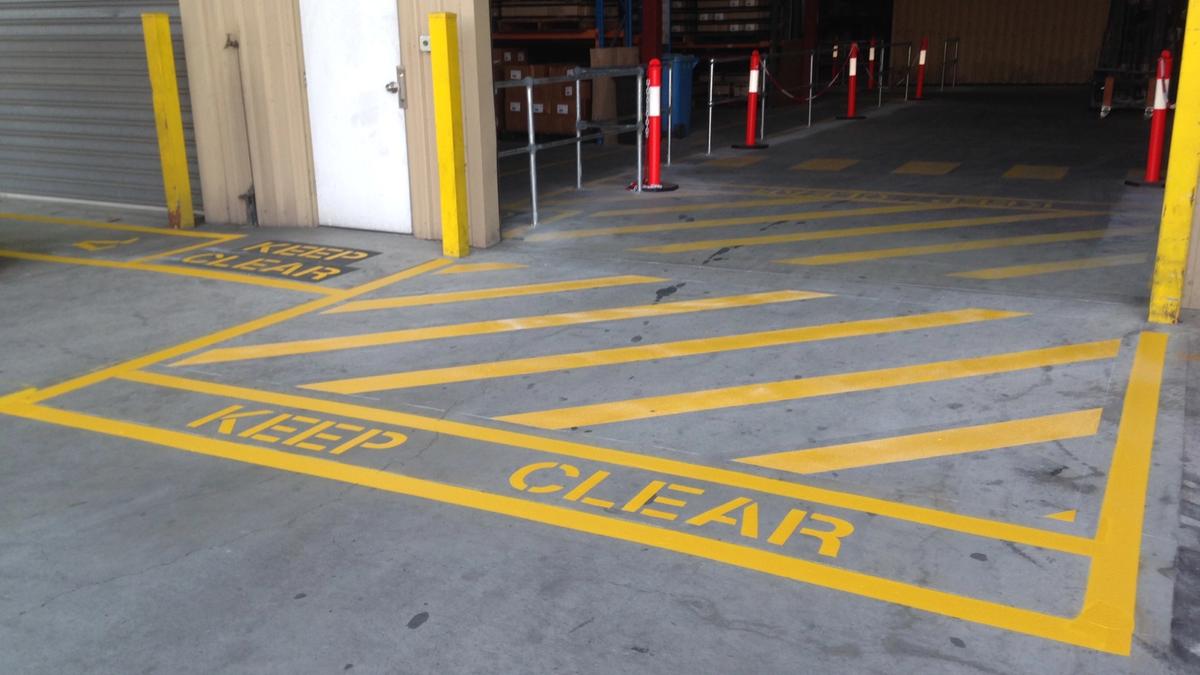
Line marking works best with consistent signs and symbols. Floor arrows, yield symbols, speed reminders and clear wording like “KEEP CLEAR” or “PEDESTRIAN ONLY” help turn the floor into a shared language that everyone can understand quickly.
Optimising Colours, Patterns and Maintenance Cycles
Once you know what needs changing, the next step is choosing colours and patterns that are easy to see under your warehouse conditions. Lighting, open doors and concrete floors all affect how markings stand out.
Many sites use simple, consistent colour systems, such as:
- One colour for pedestrian walkways
- Another for forklift and vehicle routes
- A strong, high-contrast colour for no-go or exclusion zones
- Clear markings for storage, staging and emergency access
Line styles also tell a story at a glance:
- Solid lines for permanent walkways and keep-out areas
- Dashed lines to show optional or shared zones
- Chevrons and hatchings to clearly mark areas where people should not stand near docks and intersections
- Text stencils for “STOP”, “GIVE WAY”, “NO PARKING” or “KEEP CLEAR”
A heatmap is not a one-time project. Traffic patterns shift with new contracts, new product lines and new equipment. Markings also wear over time with cleaning and turning wheels. To keep the plan working, it helps to:
- Set regular inspections of lines, signs and symbols
- Refresh the heatmap with updated near-miss data every few months
- Plan re-marking as part of ongoing warehouse safety maintenance
That way, your floor markings keep matching how your warehouse actually works, not just how it used to work.
Turning Your Heatmap Into a Safer Warehouse Plan
Near-miss heatmaps work best as an ongoing improvement habit. When teams get used to reporting close calls and seeing them turned into real changes on the floor, they are more likely to speak up. Over time, the space itself starts to guide safer choices instead of relying only on memory or rules.
A simple way to begin is to set a short trial period. Capture every near miss for 30 days, map the hot spots, walk those zones when site activity is high, then decide which intersections, dock doors and pick faces need the most urgent line marking changes. From there, you can plan new layouts and prioritise the updates that will make the greatest difference to safety on your warehouse floor.
Get Started With Your Project Today
If you are ready to improve safety and compliance on your site, Angle Linemarking QLD can help you plan and deliver clear, durable markings tailored to your workplace. Talk to us about your facility, and we will recommend practical solutions that suit your layout, traffic flow and regulatory requirements. Explore our safety line marking in Brisbane services today and take the next step toward a safer, more organised environment.