
Safer Warehouse Traffic Flow Without Repainting: Barriers, Mirrors, Rules, Signs
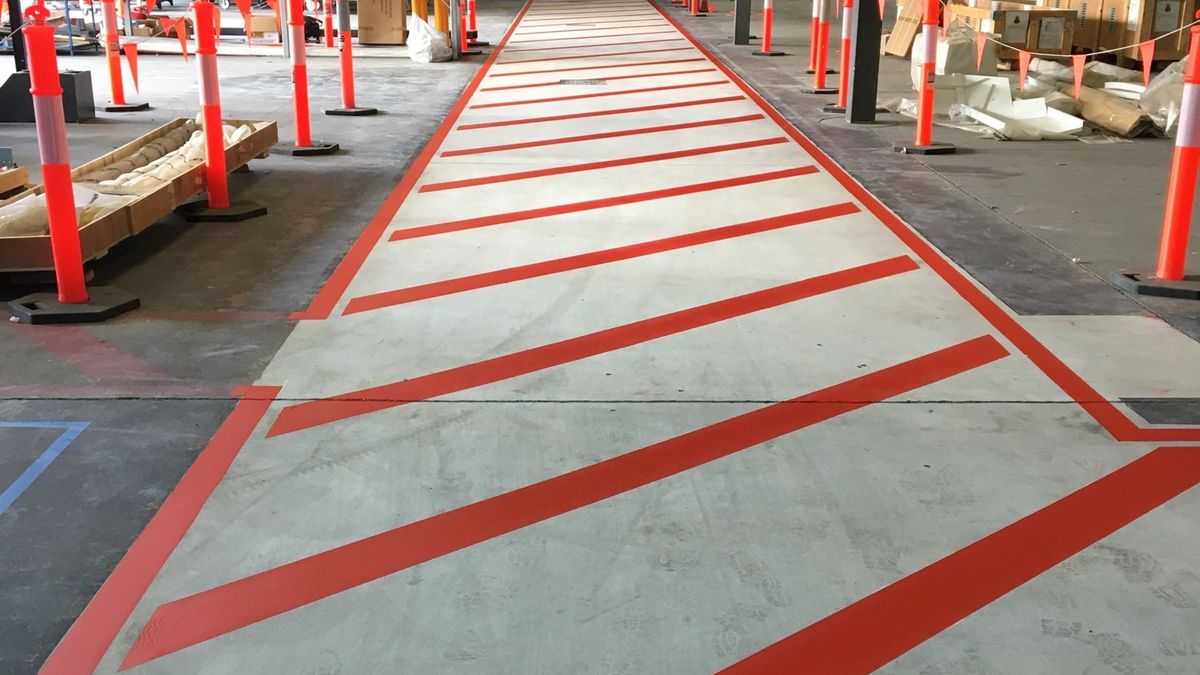
Rethink Warehouse Traffic Flow Without Repainting
Busy warehouses often have forklifts and people moving through the same space at the same time. You may know the site could be safer, but a full repaint of every line on the concrete may not be practical.
Good traffic flow is not only about fresh paint on the floor. Physical barriers, mirrors, clear one-way rules and smart signage can all reduce near misses and make it easier for everyone to move with confidence. For warehouses that already have forklift lane marking in place, this is a practical way to improve safety without a full redesign. Line marking works best when combined with simple additions that help markings perform better in real working conditions.
Map Your Risk Zones Before You Move Anything
Before you buy barriers or order new signs, it helps to know exactly where the real problems are. Most conflict points are not a surprise. They are usually where people and plant naturally cross paths.
Common risk zones often include:
- Loading docks and truck bays
- Pallet drop and pick-up zones
- Staging and packing areas
- Blind aisles between racking
- Access doors to offices and amenities
Walk your warehouse during busy periods. Watch how forklifts actually move, not just how they are meant to move on the plan. Look for shortcuts people take across forklift paths, where they step out from behind pallets or where they walk between parked forklifts.
A simple step-by-step checklist can be:
- Observe busy periods from a few different spots
- Trace normal forklift routes and turning points
- Note pedestrian desire lines and crowding points
- Take photos and quick sketches of problem areas
- Ask staff about any near misses they have seen
Then rank each area using a basic risk view: how likely is a conflict, and how serious could it be if it happened? Focus first on high-traffic intersections and blind corners where speed is higher or space is tight. Existing forklift lane marking can help guide this review, especially where markings are being ignored or no longer match the way work is actually done.
Use Physical Barriers To Separate People And Plant
Once you know your risk zones, physical separation is one of the clearest ways to reduce conflict. Barriers make the safe path the easiest path, which means people are far more likely to follow it.
Types of barriers that work well in warehouses include:
- Guardrails along main forklift routes
- Bollards next to doors and at building corners
- Handrails and mesh fencing for fixed walkways
- Racking end protection where impacts are common
- Low-profile kerbing to mark forklift exclusion areas
When placing barriers, think in terms of continuous paths. Try to give pedestrians a clear, protected route from the car park or entry door to the work area, then to amenities and exits. Protect high-traffic intersections so forklifts cannot cut corners into walking zones. Shield important assets like switchboards, cool rooms or control panels from fork tynes and pallets.
There is a balance between temporary and permanent solutions. Modular barrier systems can be moved as your layout changes, which suits fast-changing sites. Fixed barriers suit long-term forklift exclusion zones and core walkways where you know the flow is stable.
Always keep compliance and practicality in mind. Do not block emergency exits or fire equipment. Make sure forklifts and pallets still have enough turning room. Bright colours and good contrast under warehouse lighting help operators see barriers clearly.
Fix Blind Spots With Mirrors And Line Of Sight
Even with lines and barriers, blind spots can still cause trouble. Corners hidden by high racking, doorways between zones and busy intersections all increase the chance that a forklift and a pedestrian will meet without warning.
Different mirrors suit different spots:
- Convex dome mirrors for four-way intersections
- Rectangular mirrors for long, straight aisles
- Outdoor-rated mirrors for loading dock entries
Place mirrors at about driver eye height so they are actually used. Angle them so operators can see both forklifts and pedestrians approaching from each side, and check from a real forklift seat before locking in the position. Avoid putting mirrors where glare from skylights or high-bay lights makes the reflection hard to read.
Mirrors work best with extra cues. Add warning signage at approach points, set low-speed expectations at blind corners and make it clear who gives way where. Simple, consistent rules such as stop and look before entering this aisle help operators build safer habits around each mirror location.
Control Traffic With One-Way Rules And Smart Signage
One-way systems are a straightforward way to reduce head-on conflicts and awkward reversing moves. They are especially helpful in narrow aisles, around staging areas and near packing benches where space is limited and people are often distracted.
To convert an existing layout, you can:
- Choose a main clockwise or anticlockwise travel loop
- Set key aisles as one-way only for forklifts
- Create clear entry and exit points for docks and storage zones
- Keep at least one safe pedestrian crossing point in each area
Signage is what brings these rules to life. Clear, consistent signs mean staff, visitors and contractors all receive the same message.
Useful sign types include:
- Speed limit signs in busy zones
- One-way arrows at aisle entries
- Forklifts operating warnings at doorways
- Marked pedestrian crossing points
- Door messages such as pedestrians give way to forklifts
Updating signage to match existing forklift lane marking can improve safety quickly. Aligning the visual story on the floor with the story on the walls means there is less guesswork for everyone.
Embed The New Rules In Daily Operations
Barriers, mirrors and signs are powerful tools, but they work best when backed by clear rules and steady supervision. People need to understand what has changed, why it changed and what is now expected of them.
Simple steps that help include:
- Toolbox talks to explain the new traffic plan
- Updated induction material for new staff and contractors
- Refresher sessions for forklift operators on routes and right of way
Make review part of normal work, not a one-off project. A regular walk-through with supervisors, drivers and pickers can uncover small issues before they turn into larger ones. Adjust barrier positions, mirror angles or sign wording if people say they are confused or still feel exposed.
It also helps to align traffic rules with other warehouse processes. Some sites use pedestrian-only periods in high-risk areas, such as during manual stock counts or large changeovers. Others set simple rules like no phone use in traffic zones so attention stays on moving plant.
By combining lane marking with barriers, mirrors, one-way rules and clear signage, warehouses can significantly improve how people and plant move together without needing a complete repaint of the floor.
Get Started With Your Project Today
If you are ready to improve safety and traffic flow in your warehouse, we can help you plan and install precise forklift lane marking in Gold Coast tailored to your site. At Angle Linemarking QLD, we work around your operations to minimise downtime while delivering durable, compliant results. Reach out to our team today to discuss your layout, timeframes and budget so we can provide a clear, practical solution.